Showing posts with label eng. Show all posts

Fat squirrels


"Do you know what is the purpose of living?" I asked.

She did not answer. Instead she opened her palm. There was a hazelnut.

"You want to say, that life is nuts?"

"Maybe," she smirked. "Stay very still and observe." She moved her hand with nut on the ground.

For a while nothing happened - there was only wind between the gravestones.

Then, suddenly there was a bit of crackle, small pieces of bark fell on the ground and a squirrel appeared.

Slowly and carefully it crept closer. Got scared and ran away, then came again. Finally it collected enough courage to come close and grab the nut.

"Wha-" I started to ask, but she shushed me and took out the next hazelnut. While the first squirrel was happily munching, there appeared a next one from behind a moldy gravestone 

After the first squirrels got a bite, there were suddenly more than twenty of them running between and on the old gravestones.

Some of them were more aggressive and bit the finger instead of the nut and tried to carry that away. Others were too afraid to come close at all.

We stayed still. Pulling out a new nut every time the previous one was taken.

After half an hour or so she stood up.

"So the purpose of living?" I pushed the question again while we started walking, followed by some squirrels who were still hungry.

"What do you think?" she asked.

"Fat squirrels?"

She laughed. 

"Oh a noble quest indeed, but I'm sure you can find more meaning in that little act," she said, moving towards the cemetery gates.

"To observe, to be present and enjoy the moment even if in pain," I suggested, remembering all the bite marks in her fingers.

"Maybe."

"You have to stay strong in order to create relationships and for that you have to put your nuts in the fire."

"Possibly," she snorted with laughter. "But is that all?"

"No," I said. "No, it is not," I sighed.

The time feeding squirrels was fun, but it did not last forever. 

Nothing did. Not a thing nor a person. 

All of it was temporary.

It was something to keep in mind as walked through the gates... alone.

Let's talk about suicide

[spoiler warning: includes serious topics and silly memes]

No, my friend, you should not be alarmed about this title.

Why? Because it exists and the ones who have not yet seen the beast might be more easily consumed once they fall into the trap. So we must talk about the beast.

Also, because it is something that is in my mind on the back-burner. The thought of killing myself has been on quick-dial in my brain for most of my life. It is often my first thought when I feel I failed, when I feel lonely, when ... well, it depends on my mental and life state at that exact moment. Sometimes it comes only once a month, sometimes several times in one day. But the demon is true and it is there... and the demon is part of me. Even with therapy, I have not been able to get rid of it, only to accept it's existence and find ways to handle it. 

But why this post?

This year has been hard. Extremely hard. For a lot of people. 

Our lives were disturbed by Covid and then the war. Not that neither of them have disappeared, but right now they don't seem so relevant anymore (in our brains at least) and many of us try to go back to our "normal lives". To the life we had before the disturbances happened. The problem is that we have not had a "normal life" for a few years now and don't know how to do it.
For me "going back to normal life" meant that I had to finally start working on something that had been waiting for even a longer time. Before Covid hit we had renovations and other tasks that just took all the attention, time and brain processing power. This year, 5 years too late, I finally had the mental resources to properly deal with the suicide of my best friend. And as some of you know, this was not my first rodeo. I have been "in the topic" for a long long time already.
However it is the first time in my life when this "Taboo topic for oh so many" has popped up in several areas of my life. I have never before heard about so many losses to the beast within my acquaintances and friends of friends.

Hence, this post here. This poorly written bundle of words that tries to make a small positive change. Maybe it helps. Or maybe, in case you have the demons, you at least have the assurance that you are not the only one.
Cheers! Do your best and don't give in. No, I don't want to guilt shame you or anyone into staying alive. Only to remind you that you are connected to people - if you want it or not. If you disappear, it will create an empty hole and cracks around it that that have sharp edges and will cut the people closest to you for years to come. Trust me. So if the dark tentacles come, try to procrastinate.
Surviving one moment with "nah, not today" will give you one more day of life. Do that long enough and you might die of old age before you kill yourself... and who knows, maybe you will even enjoy the ride.


So, here are some things that I have noticed that work for me (next to the procrastination).

Give your brain a bone

Your brain is messy and it creates stuff. It's its job to create stuff. Sometimes it has the tendency to create 
stuff that is not good. So, why not give it a task. Something that takes the creativity that your brain might use poorly and will use it for something good instead. 
It can be the task of noticing certain positive elements every day or it can be the task of writing a book or making art. Whatever floats your boat. The point is to move the focus to something that is better than the default setting of your brain. Even if it is silly and unpractical. 
You know the story about two wolves living in the heart of every man? Yeah, feed the right one. If possible, give it also something with a meaning. If not, silly is also totally fine. As long as it has a bone to chew on, it is fine.


Ignore the pain

This one might cause shame for many, and complications in the long run, but it is totally fine to sometimes just ignore the pain.
Do you know what I did on the day I learned about my best friends suicide? I went to the birthday party of another friend, just so I could feel normal again. Even if just for a bit. 
Our brain needs rest from pain. It is fine to give it to it. Not a strong face that stays there forever (as if nothing bad happened), but a break from the agony, that will give us the energy to deal with it.
Humour is a good distraction.
So is reading.
 Doing theatre or being playful might work. Playing music or listening to it. Sex possibly.
I'm sure you have your own ways, I'm just here to remind you of them.
Do something that you might enjoy even if you feel terrible.

Talk about it

Therapy of course would be helpful, but it's tricky, I know. Finding the right therapist and the cost etc. It can be a real struggle. I personally have been rather lucky in that area.

However talking bluntly and honestly with your friends can also be helpful. Assuming that they have the capacity to listen. Looking at the rates in our little country, it is very likely that someone in your close circle has been impacted by mental issue or someones suicide. And even if not, death is a universal thing that we will all face at sone point. We all will face the dark.

You are not alone. You just need to find your own tribe.
I know it is scary and you will fail and will feel broken. But when you finally find someone who can really listen with no judgement... to be truly connected with someone with all your flaws... I think it is worth it.
We are all humans and surprisingly similar.


Don't be an ass

Generally a good idea I think.
Essentially, even if you need to hide in a cave sometimes, don't burn the bridges - you might need these bridges later. Bridges are what people use and as a social creature you actually need people.
It's fine to take some alone time and close the bridge but NEVER destroy it.

Also this is where you can turn your demon into a strength. Yes life is unfair and enraging at times and sad and silly and stupid... But you know that people die. You know that you will die. You have that insight.
So maybe... while you are still alive... you can try to be kind. Why waste the short time we have on this planet on making other people feel terrible?

Also, if possible, try to not leave things unsaid. You might not get second chances. It might not be that the demon takes you - sometimes just life sucks.
And if that is awkward and odd... that too is fine. Imagine people remembering you as someone who was awkward and silly but honest and kind. Would you not prefer that instead of being remembered as an ass?


Tomorrow You

Even if you don't really care about yourself today, try to care about the person you are tomorrow.
Even if you don't care about your home right now, the tomorrow you might.
Even if you are not hungry, the tomorrow you will be grateful for the sandwich. So why not make him a sandwich
This also means signing up for events that tomorrow you might like even if today you want nothing to do with them. Just trust your gut feeling and sign up and do your best to attend.


Don't overthink it

Life is messy and so are you. There are things you can do and things you can not.
You cannot solve everything, neither should you. Thinking and worryn over things you cannot change will not make it better.
You do you, the best you can and that is good enough.
Don't stress too much about the rest.


Taking the last point into consideration, I think that's all I can think of. 
So...
Stay safe.
Stay weird.
Stay alive.
Cheers!

Signed by Tim and his Demon

The Big Anime Post

Today I will talk about anime and as I have actually never written about it, this will be a long one with some suggestions from yours truly.
If you love anime or not, I'm glad you are here as I might be able to peak your interest and prove once again that the anime is not just for kids nor is it just boobs and short skirts as my wife thinks (and thank god, it is not boobs and short skirts for kids). Just as some people have binge watched Game of Thrones, Vikings or some other popular series, I have been doing the same with anime (and have never even seen an episode of GoT). That medium just seems to work for me.

Obviously, I have acquired some tastes over the years, that you might agree with or not.
Following is a list of anime series that I would recommend to check out if you have not (it will not include movies as this would make it even longer).

It does not mean that I have not enjoyed other anime, but these ones have somehow found a place in my heart. So the list is essentially what has clicked with me (don't worry, you might also find something you like at the end of the list)

Avatar the last Airbender 

What's it about: Ang, the last airbender, has to learn how to bend all the elements and save the world.

What's it also about:
grief, loss, finding courage, solitude caused by power, getting over your mistakes.

Comments:
Yes, I know, it is not an anime per se, but it still is an animated show and for the untrained eye, there is no difference. It is aimed for kids. So is Le Petit Prince. Who cares. It is a brilliant show and will stay one - filled with humour but also with a lot of character growth. And the growth/change is there for many different characters.
The world concept and magic in it is super clear
Highly recommend!

If you like this one: There is The Legend of Korra that could be seen as spinoff - it is not too bad but will not beat the first one.


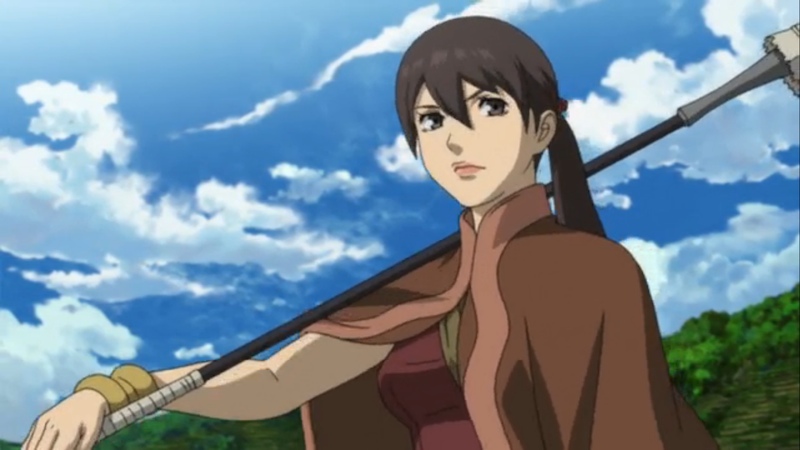
Moribito - Guardian of the Spirit


What's it about: a bodyguard is hired to save a life of a royal possessed kid. They take a journey while being chased.

What's it also about: Principles, doing what is right, family and bonds with strangers

Comments:
This is a brilliant anime that not too many know about. Characters are realistic and everyone has a motivation. It is pleasure to watch and balances between fast paced action and slow movement. Highly recommend!

If you like this one: There are plenty that have fantasy, fights etc but to find something where there is kid - guardian (parent) relationship and neither of them is silly, that is rare.

Ghost in the Shell 


What's it about: A team of experts fighting crime in future with high-tech: cybernetics, androids, etc

What's it also about:
What does it mean to be a human, alive or have a personality?

Comments:
There is a lot of that. It was recently turned into a movie. Don't watch that. Watch the first and second anime series (Stand alone complex and SAC 2nd GIG). You can also watch the anime movies (with the first one, keep in mind that it came before the move Matrix... yes, it influenced it a lot!)

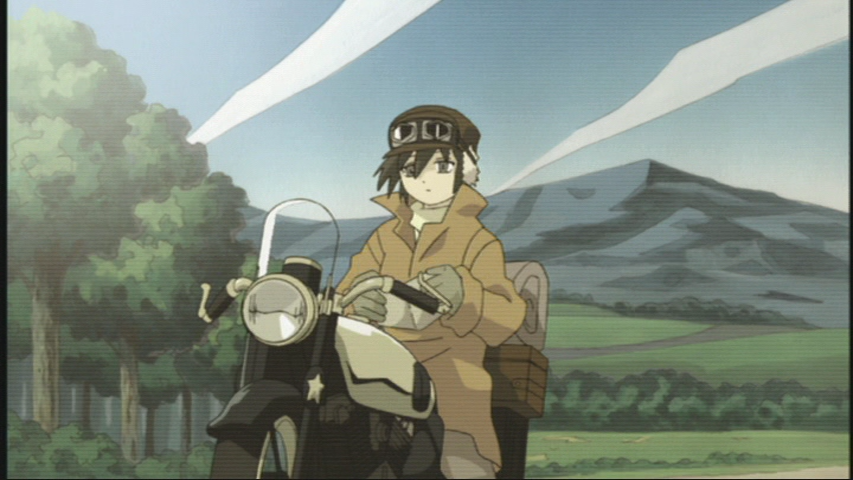
Kino's Journey


What's it about: A girl on a talking motorcycle (like knight rider, but not a guy and not a car) travelling the world and visiting different places. She has a gun.

What's it also about:
Philosophy, ethics, being human.

Comments:
There is one from 2003 and one from 2017, both are nice in my opinion, though the first one did not seem to have a big budget. It does not look too special nor have great dubbing but there is something great in it. It slowed the world down for me and made me think. You love it or hate it.

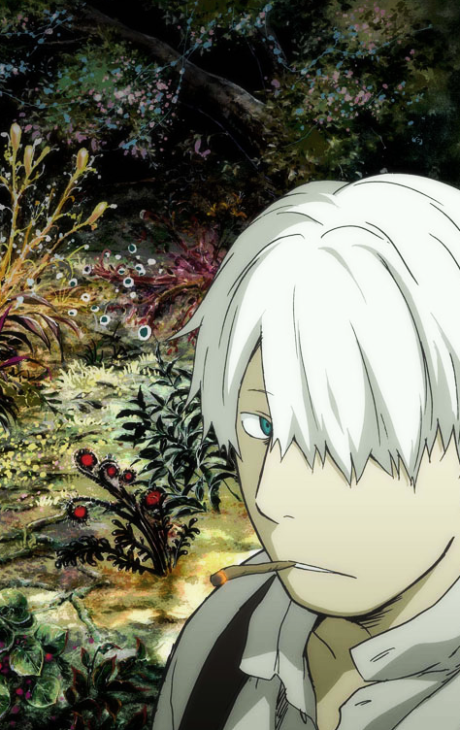
Mushishi


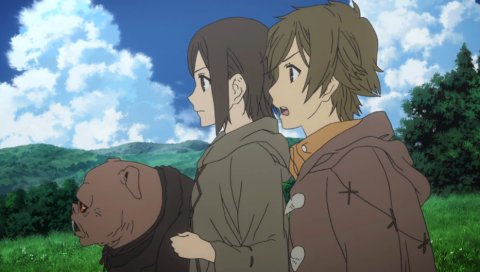
What's it about: A wise "medicine" man on a journey helping people where the balance of the world needs to be fixed. He interacts with invisible forces of nature, called mushishi.

What's it also about:
have you ever read Zen stories? This will remind you that a bit, but will also be spooky and dark.

Comments:
The haunting calm is perfect expression for this one. The series consists of different stories where the balance of the nature, otherworld and human world is somehow no longer there and our protagonist has to fix it. It is a slow paced anime but with one episode you could really feel as if you visited a different world.

If you like this one: Mermaid Forest, Bird of Fire. Just as this one they consist mostly of cautionary tales and have strong mythology


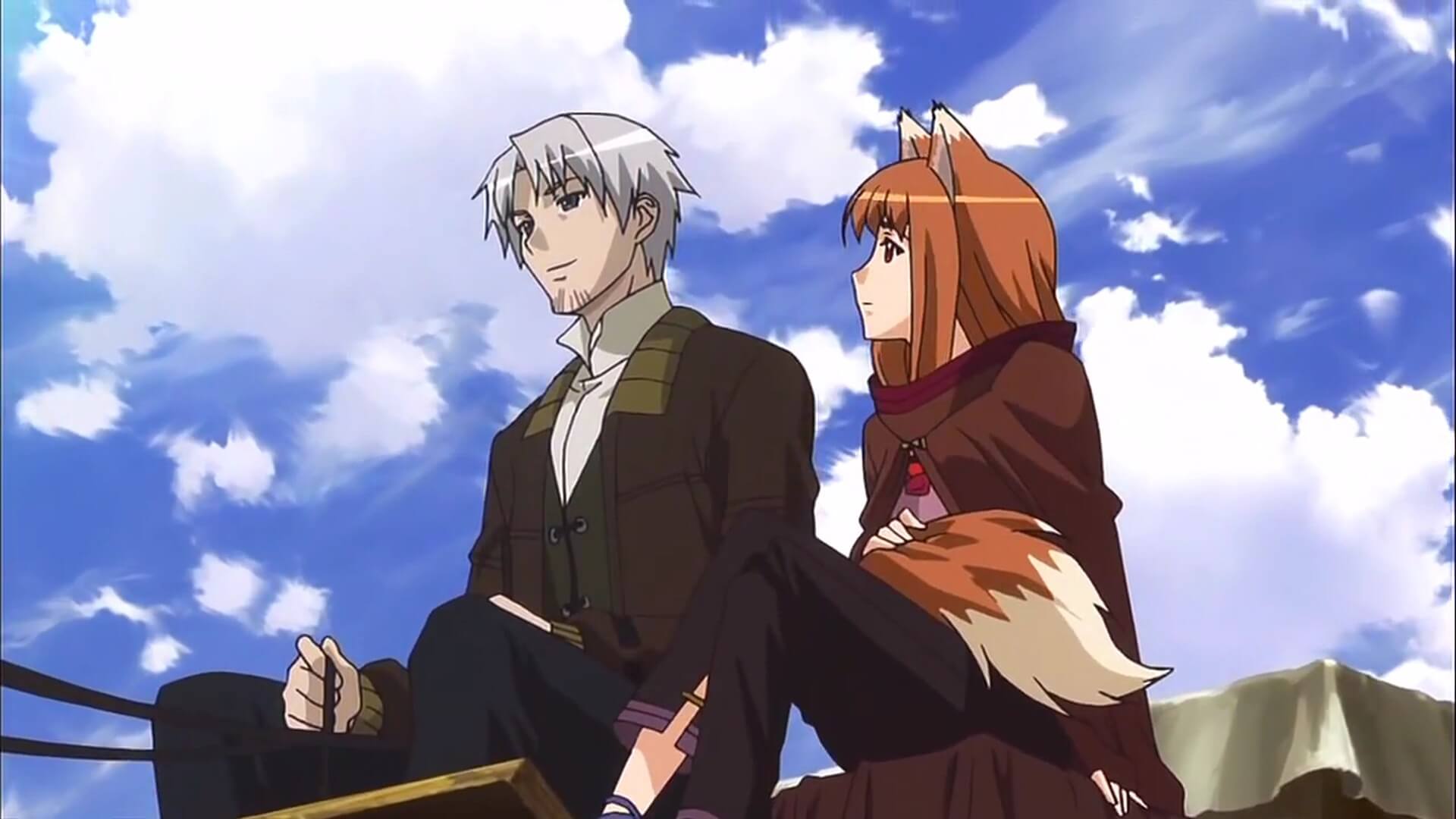
Spice and Wolf


What's it about:
Holo, wolf god of harvest, is travelling with a merchant - accidentally learning the trade on the road

What's it also about: Loneliness, dreams, hopes. The urge to feel needed and remembered.

Comments:
This has many funny/brilliant moments to quote. The relationship between the two is enjoyable and there are unexpected turns and twists.

From the New World


What's it about
: Future. Kids with powers growing up and learning more and more about the world.

What's it also about: the cruelty of human kind. Who are the real monsters?

Comments: That one was a shocker for me. Not due to the story itself, which is mostly super cute, but the explanations in the end. Some images will just stay in my brain forever

Barakamon


What's it about: A stressed out calligrapher taking some time off in countryside, trying to improve his craft

What's it also about: Family, bonds between strangers, kids... a lot of kids.

Comments:
If you want something that makes your heart sing, take this one. Funny, but also realistic slice of life.

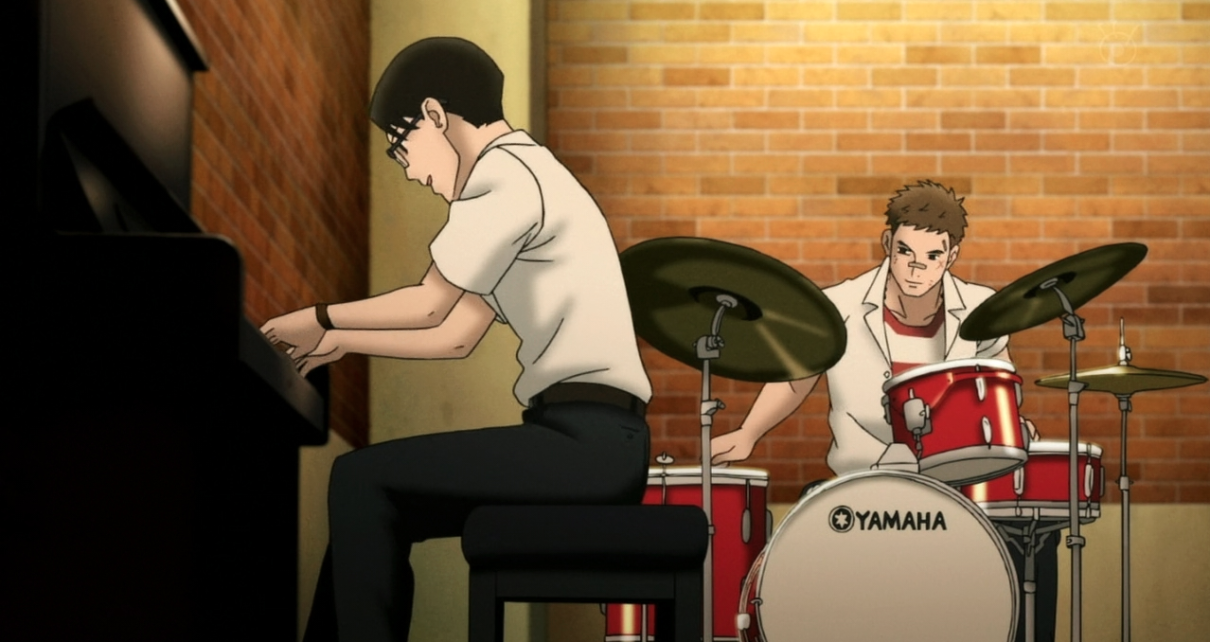
Kids on the Slope


What's it about: 2 very different guys starting a jazz band

What's it also about: Friendship, doing what you need to do in order to feel alive, I guess also about finding your place in the world

Comments: Have you ever been in a band or jammed with someone? Have you ever been exactly on the same page with your partner? Yes! This anime gets it. They get it so right. This one too will make your heart sing.

If you like this one: Carole & Tuesday might work

Grimgar of Fantasy and Ash


What's it about
: a group of youngsters are transported to a fantasy world and need to slay monsters to survive there.

What's it also about: Survival, sacrifices, grief, friendship

Comments:
With so much Isekai around, this one does not seem too special on the first glance. However, the fights in this anime have weight. They are important. You can feel how everyone is fighting for their lives - and damn, this is so rare in anime that it even compensates the fan service, silly female clothes and stupid jokes in this one.

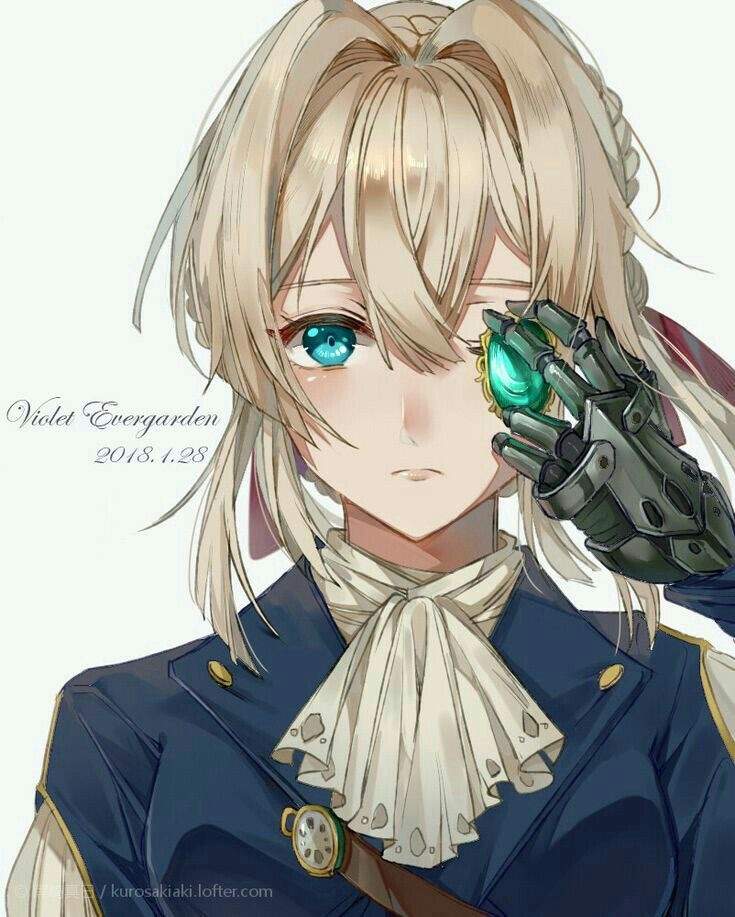
Violet Evergarden


What's it about: A human-doll war machine learns to fit in as a human after the war is over

What's it also about: Finding your purpose in life. What do you do when you have been made for a purpose and it no longer exists? Learning who you are.

Comments: This is a tale of growth and learning for the protagonist and it is a great one to follow.
Also, looks nice.


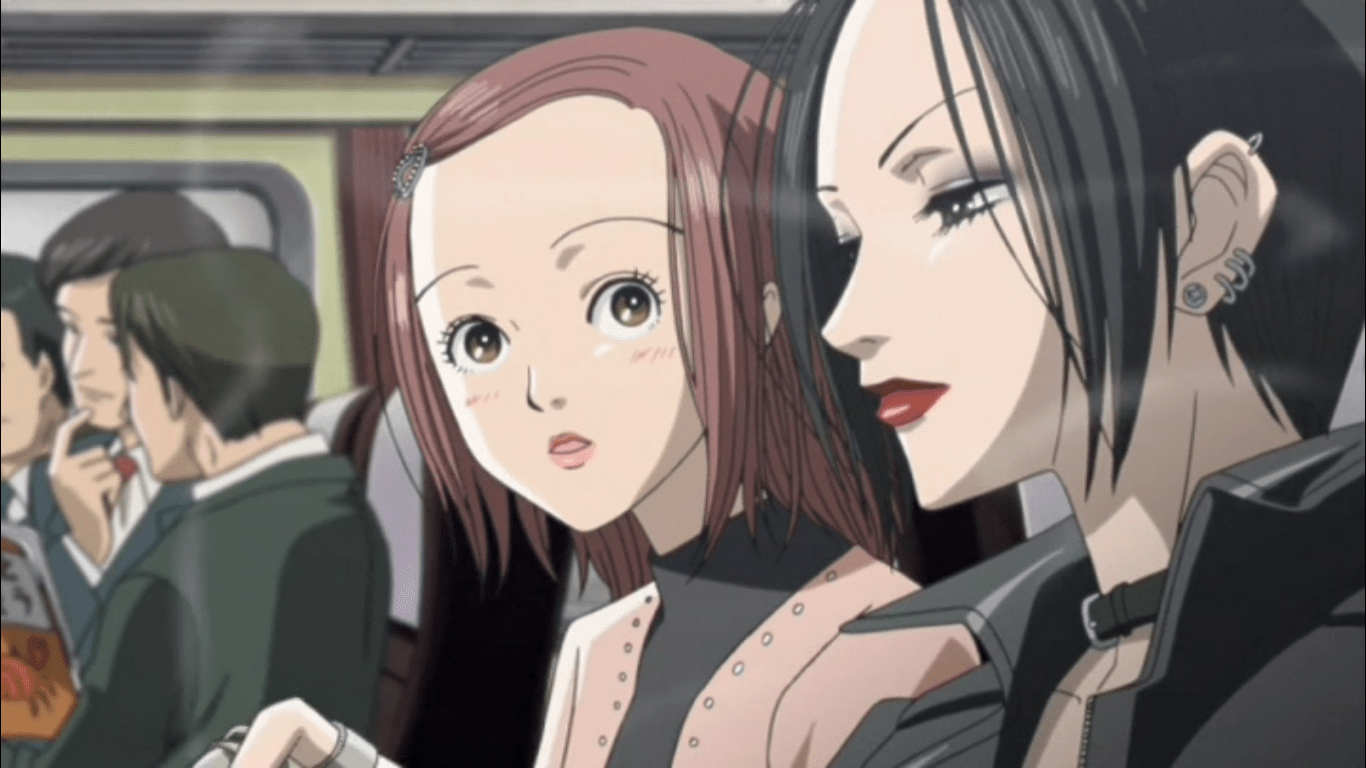
NANA


What's it about: Two young girls, both named NANA, one tries to become a rockstar, the other find love.

What's it also about: Feelings, relationships, messiness of life

Comments: I'm not sure why this one got stuck in my head -  there is even one of the songs from it that always gets me the shivers. Is it maybe the realistic feelings presented? Or maybe it reminded me myself at age 20. Not sure, but it worked for me.

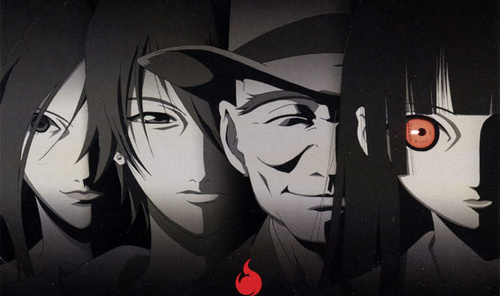
Hell Girl


What's it about: There is a web page that opens only at midnight - if you add someones name there, they will be taken to hell. However, your soul too will be taken there once you die.

What's it also about: Cruelty of humankind. Making hard choices and living with them. Human condition.

Comments: While rather dark, I love this one. The way how the evil-doers are punished just seems enjoyable... There is something so dark and human in the whole package.

If you like this one: UN-GO has something a bit similar

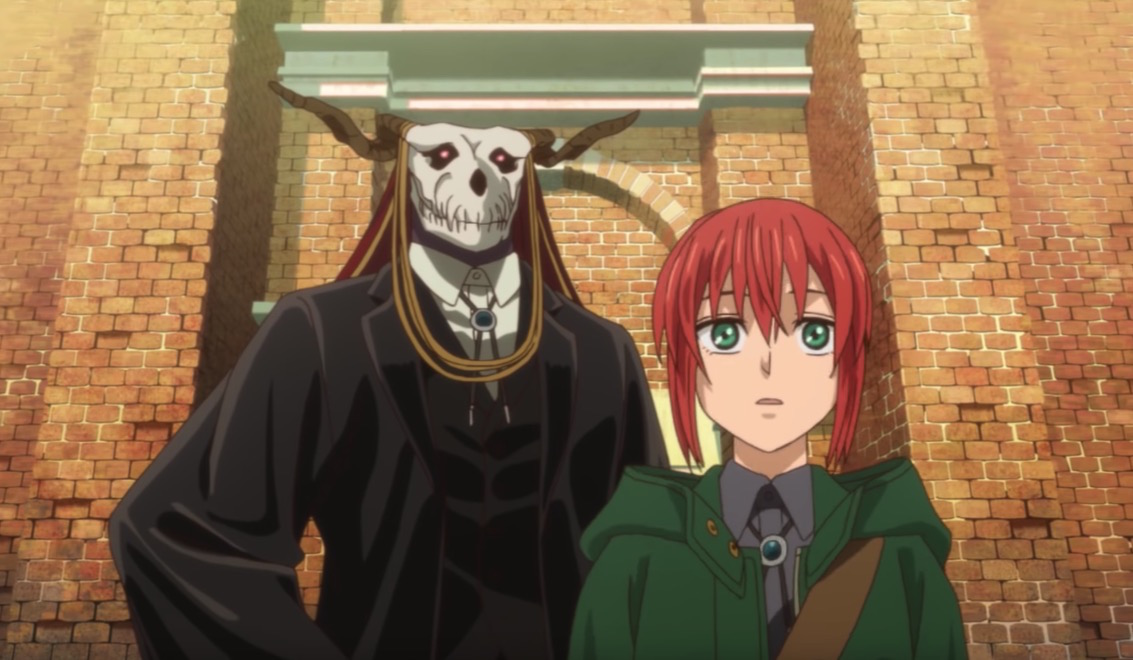
The Ancient Magus' Bride


What's it about: A girl disappointed in life sells herself and is purchased by a strange magus who wants to turn her into his wife

What's it also about: Being human, being awkward, finding your place in the world

Comments:
Yes, this one is not ideal. Even the concept of buying someone to be your apprentice and later wife is messed up. But there is something sweet in it (not in the buying humans part, but in the anime itself)
Let's take Ainsworth - he has difficulties understanding the world and tries to do everything to understand it and fit in correctly. He is messed up and dark, but working on keeping a balance. Using mostly logic but failing with that. And that makes him somehow strangely more human like and enjoyable as a character.


Did not find anything in the list? 

Fear no more. Here is some stuff that I feel was cool, but did not click this much. Maybe you will find something interesting here. (missing some animes still - nor my brain nor my notes are perfect - but it is at least something). I only dare to recommend stuff that I have watched myself, so in case you do not see your favourite 900 episode anime here... well, that is the reason. I prefer stuff that is finished and not too long.


Category: Gore and Bloody Mess

Elfen Lied; Hellsing Ultimate; Black Lagoon; Parasyte -the maxim-; Attack on Titan; Another


Category: Unexpected wtf Twists

Puella Magi Madoka Magica; Berserker; Steins Gate; Astra Lost in Space; Claymore


Category: Awesome soundtrack that I still listen time to time

Death Note; Parasyte -the maxim-; Ergo Proxy; Elfen Lied


Category: Cool Action/adventure stuff

Samurai Champloo; Cowboy Bebop; Attack on Titan; The Rising of the Shield Hero; Samurai 7; Yona of the Dawn; Le Chevalier D'Eon; Made in Abyss; Goblin Slayer; Black Butler; Noragami Aragoto; The Heroic Legend of Arslan; Black Bullet; Blue Exorcist; Darker than Black; Overlord


Category: Not 100% sure I understand what is going on but will keep watching

Ergo Proxy; When They Cry; Devilman: Crybaby; Rin: Daughters of Mnemosyne; Land of the Lustrous; Fooly Cooly, Furi Kuri


Category: The story is not finished, so I don't know if they will F it up or not, but the beginning is promising

A lot. Way too much to add all of it here.


Category: Too Long, Did not Watch

... [empty for obvious reasons]...


Bonus Category: My respect for using sign language in anime

Gangsta. (+ there is also a movie A Silent Voice)

How to write like an improviser

This year I finished my first book and the next one is already 55k words in. Not too shabby, eh?

It does not, however, mean that I know what I’m doing. As I teenager I wanted to be a writer, but then at some point, I gave up on that dream. Why? Because it was too huge and too scary.


I’m not saying that it is less scary now, but at least now I have the skillset to deal with it – the skill set of an improviser. So, without further ado, here are some improv tips to keep in mind that could help you in writing and possibly in any creative activity.

1. Just do it


It can feel scary and intimidating, but if you do not take this step, nothing will happen. So, be there and do something. It does not have to perfect and it cannot be – especially when you have never done it before. But before this step, there is no growth. You will not become good at something by just hoping that you will get good at it. You have to do it. It is as simple as that.

2. Enjoy what you do


Imagine that you write a book but no-one buys or likes it. Pretty bad, eh? Now imagine that you hated writing it and spent several years of your time on it. Sound terrible, right?
The least you can do it is enjoy it yourself and even if the world does not need it later, you had already your fair share, and that is good enough.

3. Discover


I’m always curious to see where the story goes. Shouldn’t I know it as a writer? Maybe, but it would not be as fun if I did. Knowing too much ahead could even hinder the writing. Especially if everything is super detailed and well thought through in the movie that you see in your head. How could you ever put all that perfection into words? Well, obviously, you can’t. At least not like that. You could get it pretty close, but it will never be exactly as you have it imagined - the writing process changes the outcome, whether you want it or not. 
However, that is not a bad thing. You discover something new and maybe even better.

4. Ask 'What comes next'


The main thing is to know what comes next. And then you will see what comes after that. Step by step.

Some things will come naturally when you start looking at the situation through the eyes of the characters. What would this character do in that situation? Well, you know the answer. Also, why not add some challenges to the characters? Enforce them with hurdles and joys. Have fun with them.

5. Be aware of what happened before


Sure, you might say, I'll just write something down with your neat trick of 'what comes next', but it will not be a good story. Well, have you seen a good long-form improv show? The actors do not know where they are going with all that but somehow it still works. Why? Because they are aware of what was already there before and can then link it all together. 

Keith Johnstone (one the grandfathers of modern improv) compared long-form improv with a man who walked backwards - still moving ahead but always aware of what he had already passed.

It is a skill that can be trained.


6, Make mistakes


I'm not saying that you should do them intentionally, but at least don't be afraid to do them. I know my English is not perfect, it is not my native language, but I will not first go take all the possible English classes before I try writing in it. Mistakes happen. Sometimes I create words. Sometimes I have to use google translate or synonym generator to find the right expression. This writing would not exist if I would be afraid to make mistakes.
Just do the best you can with the current tools and skills you have and that is good enough.

7. Be ready to let go of your ideas


There are some ideas that are not too great and even if you write them down, they will not work. Still, try to finish them, and then just go on. No-one has to see them or even know that they existed. It's like in improv - sometimes you create crap. The aim is to get your skill to the level so high that even your bad show is good enough. The same should be true with writing.

So, be ready to let go of your ideas, even if they can feel the best ideas ever at the time. Just write then down with the skills and words you have and then tuck them away. You can always revisit them some months or years later. Maybe you just did not have the skills to make it work yet? Or maybe the idea just was not good enough. In any case, you will know it later. But now, let this one go, and take the next project.

8. Make clear choices to move the story forward


Writing a book can sometimes feel like an improv show. You go on the stage with a great idea and then someone comes with an even better one. Only this someone is also you. Well, one of you has to let go of the idea, obviously. But which idea should you go with? If you have not decided it after a day or two, just pick one and stick to it - even if it was not the best choice, it is better than being stuck and not doing anything.

Also, if it is writing, you can correct it later if you want to.

What should be the name of the drunk character who limps around in the palace? Who cares. What we actually care about is why is he limping around in the palace or why is he drunk.
Several of my characters have been called just a single letter at one time, only because I knew I had to get the part written down and I could always come back later to add a proper name. And even if I added a name later, I was not 100% sure about it, but at least it was better than a single letter. The single-letter thing worked only for Mr.T.

9. Tell the story you would like to hear


Would you in a different universe, who has never written a book, pick this book up, read it and give it a positive review? If not, why? You don't have to love it before you show it to others, but it should be at least something you would like to read. As they say, to love others you first have to love yourself. So, to please others you first have to...

10. Use what you have


Do you know how to create the best lasagna? Use that for a character. Not that you have to share your mother's secret recipe, but what you can share is the feeling of making a good lasagna. You have that experience in you, and you can just give it to any made-up character. Just add your experiences to the blender, mix them up and then use them where needed to the tell the story you would like to tell.
There is no shame in using your own stuff. Instead, you can add surprising credibility to your characters with it.

Also, if you are into improv, theatre, live-action roleplay or dungeons and dragons you already know how to create characters. Do that if you need a character for your writing.
Use whatever you have at your disposal.


So, this was my two cents! Hopefully, you will find these ideas just as helpful as I did. 
May your creativity fly.

A small announcement

So, this happened: This week I sold my first book!

Wait! What?

No, it does not mean that I am a door to door salesman now. Neither have any publishers picked up my manuscript. However, I did decide to put it up on Amazon as Kindle ebook (hail the cover style that makes you think of the 90s).

[update on 28th of August: Now also available as a paperback https://www.amazon.co.uk/dp/1688683372 ]

Just look at that dope 90s feeling

Wait! You wrote a book? How did that happen?

Well, to tell you the truth... it was an accident.

It all started in the summer of 2015. I was down with fever and reading Unseen Academicals by Terry Pratchett and as we all know, it is not wise to read when you are high (around 38 degrees).
After finishing the book, I had the urge to write something (also my feverish eyes could not stand any additional reading). So I started to write... and not even in my native language.
I know, it still makes no sense.

Anyways, after a few weeks, I had a finished short story that was fun and all, but the ending did not quite work. I wasn't sure what to do with it, so I sent it to some friends. After positive feedback and encouragement (insert a Personal Thank You here if you were one of these people) I continued working on it.

Soon I had a novella, that was also extremely funny, but that too was not enough.


And then it turned into a novel. But the ending still did not work, so I rewrote it... and then I rewrote it again.

I did get it to work finally and liked the characters and the story, there were obviously some other issues in it that I had missed before. So I tinkered with it some more. Then I sent it out for test reading to several friends and colleagues (I bow to all the test readers who assisted me in this step).
I fixed the mentioned bits and sent it to some competitions.

And... did not win.

To be honest, I would have been surprised if I did. It was my first ever writing in that length. I'm still surprised I wrote it and still have no idea what I'm doing when I write, but I did even less so when I started.
And after 4 years, here we are.
I decided to put it out there and focus on my next piece.

So, are you saying that it is not good? Well, that's not a wise sales pitch, mate.

No, I'm not saying that. However,  take the first book of any author and then take the last one. You see the difference. I'm not saying that I will be any good innit, but...
There are certainly people who would call my first book Pratchett fanfic and I cannot disagree. This is where my language skills and love for books came from.  Developing your own style takes time and practice and I feel the second book (that is already over 50k - I plan to finish it next year) already has its own vibe that seems more genuine.

So, you are rich and famous now?

Hell no!
But if I am lucky, people will like the book, get some smiles and laughs (it's still funny, but also serious - these are not opposites), and maybe even give me enough money for it so I could buy myself a cup of coffee at the end of the month. :) And I will definitely continue writing.
This is not the end. This is a milestone.

How long is it again?

Well, well... oh, you mean the writing?
In MS Word it was around 300 pages, but I also use a lot of spaces to keep the structure more clear. Kindle puts it somewhere around 218 pages, but it might not take into consideration the millions of footnotes.

The journey continues. 

In hindsight, it is obvious that I wrote the first book in the scrum framework - short story, novella, novel, all of them were finished products. I did not even know I had a book in me. Currently, I'm writing knowing that it will be a book. This will make a difference.

Also, I can already hint that it will be in the same world and have many of the same characters (think in style of 5 years later)

When I start thinking about it, the last 4 years of my life have been quite crazy. There have been ups  (for example getting new cats) and downs (... why do you think we needed new cats?) and I feel writing has helped me to survive it. There have been several days like this:


But I'm still kicking, alive and writing.

As Neil Gaiman put it in a speech in 2012

"Life is sometimes hard. Things go wrong, in life and in love and in business and in friendship and in health and in all the other ways that life can go wrong. And when things get tough, this is what you should do.

Make good art.

I'm serious. Husband runs off with a politician? Make good art. Leg crushed and then eaten by mutated boa constrictor? Make good art. IRS on your trail? Make good art. Cat exploded? Make good art. Somebody on the Internet thinks what you do is stupid or evil or it's all been done before? Make good art. Probably things will work out somehow, and eventually time will take the sting away, but that doesn't matter. Do what only you do best. Make good art.

Make it on the good days too."

And I must agree.

Though, I'm not sure how good it is yet. This is for You to decide.
Cheers!

Philosophies in Improv

I have had several improv teachers in my life and have tried and seen many different approaches. However, I have not met something that tries to capture improv philosophies and it is a shame as it can make a ton of difference.
Here I will try to do something along these lines. Though, I recommend taking it with a grain of salt. I'm no expert in the matter. These are just some thoughts.

Why is it important?

Let me give you an example. In LARP (live action role play) there are two main attitudes: play to win or to have an adventure.
In case you want to have the latter, you make a group of a fighter, spellcaster, healer, thief, etc - you know, the classic variety - and just try to have a great story together. Yes, it is great if you can also finish your mission, but the main aim is on the narrative and roleplay. You keep your real life and game separated.
In case you play to win, your approach is very different. You set up a group of clerics (essentially, tanks with healing spells) and use anything at your disposal to win the game/mission/narrative. Hence you have already made plans and preparations in advance to make sure you succeed.
You can already guess what happens when these two approaches clash within one game. Both will accuse the other of not being a good sport.
Both act based on their philosophy and expect others to do the same... and this is the problem. However, if you are aware of these two very different approaches, you can act accordingly and as a game master even make games that would challenge both. While it is wise to keep these approaches in mind, note that there are plenty of players who are somewhere in the middle.

What about in improv?

I have been pondering this question for a long time. I see the difference, but don't know how to put it into words. However, it can help to look at the last 2 improv books in my collection:
The Improviser's Way: A Longform Workbook by Katy Schutte
TAKE IT EASY™ by Ryan Millar
Both brilliant in their own way and both made by brilliant improv actors/teachers (and I met both of them in my first year in improv).
One gives very specific instructions on how to create and train for a format, while the other gives advice on how to not fret too much, be like water and go with whatever is there.  I don't want to call them conflicting approaches, however, one seems to be more structure oriented while the other is more about discovering what is already there. Don't get me wrong, you can also discover what is there within a structure and you can just as well create a structure around what you discover on the spot - we do it all the time on the stage.
The question is more along the lines of what do you establish first.

The Actors Dream

Sometimes we tend to forget what a magnificent thing we do as improv teachers. A stage is a scary place and many people have had nightmares of being in the middle of it and not knowing what to say.  This nightmare is so common among people who are constantly on stage that even has a name: The Actors Dream.
We, the improv teachers are challenging this nightmare and it is not a small feat as there are only two things we can do about it. The stage is scary - you can improve the armour or remove the fear.
How do you improve the armour? By learning structure and things that work. By adding items to your toolbox for every possible situation. By being in control.
How do you remove the fear? By individual work with yourself. By letting go and being like water. By understanding that there is no such thing as failure, life is short and you will die anyway (... eh, that was me, sorry).
You can see how these two ways link to the two previously mentioned books.

Teachers or Supporters?

It seems to me that we can also do the same separation on how improv is taught.
There are those who have a set rules system and way of doing improv. There is a right and wrong way to do improv and everything that does not fit their school attitude is seen as wrong.
(For example, there are people who see improv on serious topics as blasphemy - improv, in their opinion, should always make you laugh.)
These teachers are very proud of the school they participated in - seeing this as a proof that they do the right thing.
The result is that pupils know how to make a great show in a specific style of improv, however, do not often know how to appreciate other forms and attitudes.

Next to that, we also have the ones who just set a few ground rules (support and listen) and tell you to explore - be like a child and discover. Everything, (as long as you do not go against the ground rules)  is permitted and fine. The scene can be on any topic, as long as you can commit to it.
These teachers have often self-learned, have experience from different sections (clowning, etc) and have combined several teachings together. The result is pupils who are better people... as the focus is more on listening and supporting skills (that are helpful also in real life)... they also have a wider view on the topic - however, it takes more time to get them stage ready in the beginning.
What I have also seen more in this way of learning improv, is that people discover more things about themselves and often pick up hobbies they used to have in their childhood - improv is still there, but more like a framework or idea that influences life, not so much as an art form that you have to perform in.

Now, I fully know that these are generalisations and just as in LARP, one is not better than the other, it just has a different focus. Most of us are somewhere in between.

However, thinking about these topics can help us understand fellow improvisers better.


Looking for test readers!

As some of you already know, I've been working on a book and it's now arrived at a point where I'm looking for input!

The first draft of it came in a flash of inspiration (okay, more like a fever dream), but I owned it and have working on rewriting, re-structuring and polishing it ever since. I'm still getting the hang of this, but I’ve been following my gut (plus DM’ing and acting does give you some skills).

So, if you could read it and be brutally honest about it, it would be great.

Here is the summary in a paragraph:

“A New Beginning is the story of Ravenwing, a tribesman cursed with bad luck. And the story of Morgen, city ready for a change, where it all happens. In a wacky, dark and mysterious world that at the same time is not too different from the one we live in. Though, the world is a big celestial egg called New Yolk and the city has a regiment of earwax collectors - that should already give you some hints of what's in store.”

If you're into Douglas Adams or Terry Pratchett it might be your thing.

About 290 (A4) pages so a bit under 600 if you read it like a real book. Available in PDF and for your convenience also in ePUB. Please contact me directly if interested (PM, chat, email, sms, call … snail mail).

Thank you!

Rules in Improv

"If you are improvising, why do you have rules and rehearsals?"
I'm sure every improviser has heard this question and it is a tricky one. Shouldn't improvisation just come on the go? Isn't it just an innate thing that happens?
For years I have tried to explain the need for rules via the metaphor of ball game. Let's say that you have a group of friends who decide to play ball together. You could just toss it to each other or play football or basketball with it... but in order to play, all of you must understand what you are playing. You cannot play soccer and rugby at the same time (though, American football tries to do that). 
While it gives some explanation, I'm not sure it is the best one.
It is not only that we impose rules... often they just happen due to necessity.

The stage is yours

I was pondering on this question last week and raised it in my improv class. Many students mentioned that they had been thinking about it before so at the end of the class I decided to make a small experiment. We had half an hour to do anything on stage - as long as something was happening on it. No rules! (that ironically is also a rule :P) Though I did give some suggestions to make it easier.
Making total chaos is difficult. To keep on doing it for a long period of time is even harder. Our brains are hard-wired to see and create patterns and make sense of things. 
But it also varies by person. It's like writing an essay on a free subject. Some people just dig in while others are overwhelmed by all the possibilities.
Same happens on stage when you say that you can do anything. Some start creating order while others freeze. But trust me, do it long enough and everyone there wants to have some set of rules. Even the Freeform in improv has some rules, though sometimes vague and even in there, patterns start happening.
We need the safe zone to play in. 
We need a shape for the chaos. 

Chaos in a can

I feel that this is a bit better way to explain why we have rules in improv: Let's say that there is a huge ocean of chaos and you fill your glass from it  - taking just a section of the overall and giving it a shape. It is still chaos but in a specific shape. In a glass, it is easier to handle and consume.

Just as in our lives. We have our own routines and patterns that we use to make sense of the overwhelming chaos. If something disturbs that security we can get quite agitated. Nowadays the best example of random chaos, that everyone understands, is your phone or computer breaking down. Suddenly the thing that you use every day is no longer there - the order is broken.The same thing can happen when people around us die or travel abroad or whatever ... our balance gets broken and a trauma that brakes the balance really badly can sometimes even leave it this way for years to come.

I believe that all of us have a threshold of chaos we can handle and it is something that you can get better at. Improv helps. What we do on the stage is taking chaos and turning it into order. Taking randomness and turning it into a narrative. Turning strange and odd stuff into things that people can relate to. 
This is why we have rules - to introduce you to chaos. This is what we do in rehearsals. 
This is also why the longer you have been doing improv, the more you see the rules as guidelines that you can break with people that can handle it (or they just stick to one or two rules for every situation).

Rules are the auxiliary wheels you need when handling chaos because it does not come naturally and needs some order around it to emerge.

English aka What's up with the accent?

Already years ago, people did not want to believe I was Estonian when I spoke in English. The accent I had was strong but not something you would expect from someone from Estonia. Now-days, when living abroad is more common, they often ask if I have ever lived in England. The answer is no, however it does sound that way from the accent and while I often claim this is due to reading British authors it is not all there is to it.

The Struggle


Not too many know that English wasn't even my first second language to begin with. It was German and I struggled with it. I passed all the other subjects with ease but not German language. It was hard and needed work and I was... well, lazy. I think I was in fourth grade when all the numbers on my grading sheet were fives (essentially A's. We had 1 to 5 system), except from German that was a three. I just could not put the effort into it. It wasn't fun nor interesting. True, the telly did show a lot of stuff in German. I often watched cartoons on Pro7, SAT1, RTL2 and in my first memories of the Teenage Mutant Ninja Turtles they spoke in German (it was dubbed on RTL2), but it still did not seem to click with me.

Then we started with English at school (the second second language) and that made more sense. It was still difficult, but it was the language I already knew. It was the language they used on my favourite cassette.


The irony is that while I found the cover of this cassette in the internet, I did not find the playlist I remembered. The one we had started with Herman's Hermits "No Milk Today" and it also had their song "I'm Henry VIII I Am" on it somewhere but that is all I remember.

As said before, this was my favourite cassette. I listened to it a lot. So much that the tape got broken many times and I had to carefully fix it with thin office tape - loosing a section while I did it, but leaving the rest of the cassette playable.

I did a bit better in English but what I remember from that time is not the words we learned but the teacher telling me to stop making faces. That was not helpful as these were not bad faces I made. I was like an actor, tuning into the role of English language and used my face as canvas. It just made it easier for me.  However, the teacher did not seem to care as much about my skills in English as she did about me getting wrinkles from using the full potential of human face for expressing myself. She hated it. I still have no idea why but it did not help with learning the language.

Second to the first


I was going to change schools and while all the other subjects in the class I was joining were more less on the same level, there was one problem: They had had English as the first second language. This meant I had to put more effort into it.

I spent most of this summer before the new school at my grandparents. They had both been teachers in the old times. Grandfather used to be a teacher of German language and also physical education while my grandmother used to teach English. I remember learning new words and pronunciation in their kitchen. Only later did I learn that my granny had no no concept of accents. For her, there was just one English language - the Queens English. So this was also what I learned.


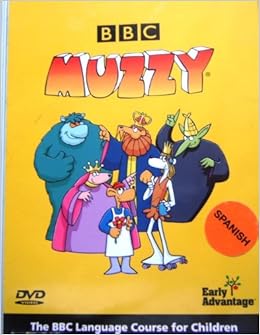
I think that about the same time they started showing Muzzy in Gondoland in telly and my parents also got the small booklets that came with it. This show was made by BBC, so that was another droplet of accent to my language pool.

I don't remember too much about the English classes after this summer. I think I was quite average, but I did struggle with the rules. If you told me to write a sentence in Past Present my brain froze. However, when there was an example sentence, I instantly found it very easy.  I was learning it the same way you learned your mother tongue - how many rules do you know about the language you grew up with? But you still feel the flow and have the overall understanding.

Finding the fun


A change in my attitude to English came in the gymnasium with a new teacher. In the first lesson she wrote "Anything discussed in this class can and will be used against you" on the wall and this soon turned out to be true. You could find the words that we used in discussions in your tests, even if they had never been in the workbooks. However, as I soon learned, synonyms would also do the trick. I had started playing Dungeons and Dragons recently and as I was the Dungeon Master I also had to know all the rules. This meant reading all the core rulebooks and understanding them. Therefore my vocabulary was already quite big.

This teacher had a sense of humour. I once wrote 'being' as 'beeing' in one of my papers and when I got it back there was a drawing of a bee, made with a red pen, next to it - something I will remember for the rest of my life. I also remember getting the papers back with a comment "Not bad, but not the words we had in the workbook." Due to my vocabulary I knew the synonyms and that was good enough - I did not loose any points from these tests. I had the skills obviously, I had just not done the homework.

At this time I had something odd going on with the the accent. I call it my Accidental Accents period. I had no control over them and they had a tendency to change in the middle of a sentence. I often had to read things out loud in the class and I still don't know if it was because I never did my homework or because it was just entertaining to listen to all the odd accents. In any case, it helped a lot.


The hardest thing I did at that time, when it came to English, was reading one of my favourite authors in the original language. I had already read several books by Terry Pratchett, but all of them were translated. Now I picked up a book that was not. It was Thief of Time and I had to read it 3 times before I understood it. Though to be honest I did read it again fourth time years later and the story was totally different.
I tried many methods for learning the words I did not know in the book: underlining them with a pencil, leaving bookmarks, writing them out etc. However, Pratchett uses a very descriptive language and it would have taken me forever to find all the meanings of the words in the early days of internet (I did have a huge and heavy Saagpakk English lexicon at home as did most of Estonian families at that time. It was a book that you could use for killing people and not something you wanted to carry around willingly). So, instead, I mostly just skipped the unknown words, hoping that the context of the material could fill me in. It often did.

By the end of the gymnasium we had national exams and I picked English as one of the subjects I wanted to take the exam in. It included different sections. I don't remember all of them, but there was a radio interview that we had to listen to and fill in blanks in the text based on what we learned. I filled in most of the blanks before listening - the person they were talking to was a world know British author Sir Terry Pratchett. I also remember losing 2 points in the oral part of the exam due to using slang. In total I got 85 points out of 100. Something that was later seen as being above B2 level.

Nowadays


Looking at my bookshelf now, I have more books in English than in Estonian. I have been working in English language for over ten years and to be honest I often even think in English. I would say that while my language skills are not perfect, I'm quite fluent. I do make silly mistakes and typos time to time but I do the same in Estonian.

Even my accent has now settled, sounding a bit British but not specific to an area. Though there is still one thing when it comes to the accent that I have to be careful with. I tend to mirror the accent I hear (just as you start whispering when someone whispers). It's a bit odd and some people with strong accents might feel that I am mocking them - this is not the case. It's just a thing I tend to do automatically and try to be aware of.

I have not lived in England, but I have visited it several times. My first visit to London (was it 7 years ago maybe?) was a bit scary. I knew the language but the speed and accents they had was terrifying (I had the same problem in Scotland a few years later). Also, it was the first time I used tubes and I had to somehow get from the airport to London city centre and to Watford from there. That meant a lot of talking with locals to be sure I did not get lost on the way. While adults usually understood that you were not local and slowed down, the kids did not. It was when I talked to the kids of one of my friends there when I suddenly went in my head "Wow, I can really do this. Thats amazing!"

A few years later I performed in Slapdash improv festival in London with my improv group (improvising in second language) and half accidentally cracked a joke on the stage that was very specific to English language and history. The audience loved it. I was in awe. It worked. I was surprised it did.

Lovely Rahel and me doing an improvised duo in a second language.

Just this month I had my first improv duo show and this too was in English.
I feel that the language and the accent are here to stay and sometimes I'm even too fluent, forgetting that others might not have the language at the same level - as it turned out last year in Spain. Asking for a Milkshake from the bar did not work, what you had to ask for instead was Ice Cream Juice.

The Holes That Make You Whole

There is a hole in my chest. 
On the left side. Close to the heart.
My wife says it looks like someone 
has taken a handful of me
and ripped it off.
I don’t know where I got it
She might be right.

There are small holes in my head, 
Most were closed with stitch or two.
From the time of being curious
and not afraid of the world.
I got the first one when I was one
and last one at eleven
when the world started to scare me

There is a hole in my right earlobe
Small one, where the bone has cracked. 
It looks as if I had a piercing there.
I didn’t. I was in a fight

I have a hole in my soul,
From caring more of death than living
For bigger part of my life.
That surprisingly still continues - less lonely now.
I would love to call it a scar,
but old habits die hard.

I have a hole in my forehead.
From being hit by a car
They say it's magic that I didn't go mad.
I now look like Harry Potter.
I sometimes worry if I've lost my mind,
but don’t know how to tell.

These are the holes I look through 
when I look at life.
The empty spaces that,
when linked together and filled between
make me.
And sometimes with all these holes,
I feel like a damn good and old 
Swiss cheese.

On emotions and connection

(This post has been waiting in the drafts for some time. Time has come to clean it up and send it out to the big world.)

It seems to me that we have a lot of misunderstandings in our culture when it comes to emotions. Surely, it is not the only topic where we feel lost in, but maybe I just notice it more when compared to people from other cultures (cold and slow as we are ... supposedly).

The big problem with emotions is that we attend to them as if they are permanent - which in my opinion is a big mistake. 

Who has not heard about everlasting love? Sounds too good to be true, right? I'm not saying that it is impossible, merely pointing out the obvious that even when you have loved someone for years, the emotion has changed over time and possibly at some point you have even been deeply frustrated or annoyed with this person. Everyone in a long term relationship (even with your family and friends) knows that no emotion is permanent nor constant and sometimes or dearest ones piss us off the most. Does that mean that we don't love them? No, but it does not fit in with the concept of everlasting love, does it?

Emotions as Reactions to reality

Look at small kids. Even a year old can laugh and cry and be surprised or scared. However these emotions often last only for a moment (or entire 4 hours car-ride ... and it is usually not the laughing we get there) and after that, something else takes the attention. They are in a way fluid and natural reactions to inner (I want food!) and outer (what is this sound?) impulses.

A cool thing to notice is that if another impulse comes in, the previous one is often forgotten. If the kid starts crying, you can bring his attention to something else - maybe do strange noses - and he might bring his attention to that (this is how parents survive). 

I think it makes sense if you look at it from survival perspective: you might be hungry, but if there is a strange sound, maybe someone else is hungry as well and it would be smart to be aware of it before you get eaten. You can fill your stomach a bit later but the threat might be imminent.

We don't lose these natural reactions to impulses. The reaction just changes as we grow up. Some people get grumpy when get are hungry others just make a sandwich.

The aim of these emotions is to bring our attention to relevant topics (food, survival, etc) and as soon as this kind of need is satisfied, the emotion is done - there is no need for it anymore. It might take sometimes more time, but still, there is a solution coming. However, sometimes if the solution does not come fast enough, the kids go mad. Have you seen a kid crying as if berserk and nothing that you do helps? As if they have already crossed the red line and cannot come back. They still need a resolution, but the emotion is just so big already that they have to let it out. Still, it will never last forever (all though it might feel like that at a time when you are a parent).

We understand it with small kinds, but not with older ones. I think that the same thing is happening when the kid is already older and yells "I hate you!" at his parents while they are in a supermarket (kids seem to prefer supermarkets for this... don't know why). Emotions are overflowing and it is only a temporary thing. Saying that this is not a nice thing to say to your parents will not help either as this is the truth at that moment.

I'm not saying that you should let your kids go wild, all I am saying is that the words seem to shock us. Would the kid just cry out like a toddler, we would understand just as well that he is sad and mad. However as soon as he says that he hates us, we take it to the heart - isn't hate an emotion and emotions last forever? How dare you to hate us after all the love we have given you? How dare you say something like this?

This brings us to the next topic.

Emotions as reactions to thoughts

Remember that I said that you cannot have everlasting emotions? I lied. You can, but these are called chronic not everlasting. These are not caused by the reality but our interpretation of the reality and often we just see what we want to see. As we translate every real event to a format that we expect and want to see, we are feeding ourselves constantly with the same impulse and have the same reaction all the time. This is more-less how depression works and that is not a emotion, that is a illness.

Humans are complex beings and at some point we develop the tools to create the emotions of our own - out from thin air. We think about a positive experience and we get all warn and good. We think about a negative one and we clench our fists and turn angry. This is a two bladed sword. We can use it wisely or let it run wild. The sad part is - when it runs wild, we do not notice the real needs. We operate in a bubble of our thoughts and interpretations.

As some emotions are too hard and/or painful some people use the same system and think the emotion into a different one. Sadness for example, in its deepest form, is paralyzing. All you can do is cry, clench on the floor and feel hopeless We all need a good cry time to time, but we also need to get things done. Sadness is not an emotion that will help you get things done. Anger however is. It has so much energy in it. It is focused. The way people do it is different, but the result is the same - one emotion is turned into another one by the need of reality. There is no time to cry, if work needs to be done and you have to pic up the kids.

In my experience changing a emotion is like drinking Red Bull. You will get the energy now, but there will be a drawback at some point. You still need a release.

But how do you resolve an emotion that has been created by your thoughts?

In the same way you resolve a regular emotion, but you also need to work with the thoughts. If they stay, the emotion will come back at some time. We often try to avoid them by bringing our attention to something else. Just like the parents do with toddlers who are crying. However, even if that is successful, it is only temporary - we still have to face the original emotion at some point.

We, humans are faulty and it does not appear better anywhere else than in our thoughts. Solving a problem with the same faulty tool (your brain) that first created it does usually not work well. Thats why we need to consult with other faulty beings - would it be friends or therapists - and they might mess it up even more. We all are complex and unique human beings and there is no-one in the world who could fully understand us.

However, it might be worth a shot to talk to someone about it, when you have constant thoughts distracting your everyday life.

All and All

Emotions are reactions to a stimuli - weather reality or thoughts. They last until there is a need for them, until they get resolved. They are natural. If you look into someones eyes for long enough - you have a shared moment of connectivity - a emotion will come from this. That is just what emotions do, it is how we react.

Therefore you cannot state emotion as good or bad. Emotions are what they are, the question is what you do with them. Do you resolve them? Do you take a deeper look into your thoughts? Do you ignore them and just try to go on with your every day tasks?

There are some thoughts and ideas that are causing the negative emotions. For example, everlasting love. This feeling as a constant can be pathological. How much guilt could it create when you freak out on your loved one? You could start thinking that maybe it is not even real thing? Maybe you are broken? And all this only because of one idealised idea that a lot of people worship and take as granted. When we have had a lot of positive shared moments with a person we could indeed call it love. However, with every new shared moment this experience will change. Relationship takes time and caring. There is no constant in it - the shared connections and moments are important, not a socially accepted idea.


Every person and every relationship is different.
Every person and every relationship is a bit messed up in its own way.
And this is why it is so awesome!

Räpased jutud

või määrdunud rääkimine, kui uskuda seda, mis Google Translate väidab. Igatahes sattusin ühe sõbraga arutlema teemal, et kas eesti keeles ja kultuuriruumis on olemas selline nähtus nagu Dirty Talk. Kes pole antud mõistega tuttavad, siis tegemist on pm tihtilugu ropumapoolse kõneviisiga seksikuse eesmärgil (kas enne, pärast või seksi ajal).

Siikohal tervitaksin oma ema (lehvitab, nagu kaamera ees)!
Ehk ei tasuks sul edasi lugeda. Päriselt ka. Ja kui loed, siis teeme nii, et me seda lähemalt arutlema ei hakka, eksole. Olenevlt lävest aga võib tunduda suhteliselt vänge tekst.
Teistele samamoodi: omal vastutusel!

Niisiis, tagasi teema juurde: Dirty Talk.

Teispool ookeani on tegemist tuttava mõistega ning eks läbi erinevate filmide on seda ka siia imbunud, kuid eesti keelseid väljendeid, mis oleks analoogsed aga ei ajaks itsitama või ei kõlaks imelikult või häirivalt on äärmiselt raske leida.

Kõik on kindlasti kuulnud väljendit "Who's your daddy!?", aga mitte keegi meist ei tahaks keset seksi kuulda "Kes on su issi!?" Heal juhul võib see panna naerma või vastatakse viisakalt küsimusele (mis oleks ka päris huvitav), halval juhul ... noh. (Meenutab tuttavat, kes tahtis proovida, mis ta partner teeb kui ta keset seksi võõra naise nime hüüab. Tegi igatahes laksti vastu nägu ning seda käejälge oli nädalaid näha.)

Mis veel? "I'm your slut" või "be my whore" jms. Eesti keeles tunduks äärmiselt häiriv, kui sa oma partnerit voodis litsiks või hooraks nimetad. Mulle tundub nagu need on suht karmid väljendid meie maal. "Oooh, aaaah! Olen su prost!" ei oma ka just seda kõla. Samamoodi kohalikud sõnad Fuck asemel ei oma minu arust päris seda kõla. Nuss, nikk kepp (proovi seksikalt öelda Ma tahan sind nussida nagu nugis!) tundub kuidagi kahtlane. Võibolla huumorimeelega tehtav. "Fuck me!" asemel "Pane mind!" on äkki töötav.

Veel Ameerika klassikat. Kui kirehoos hüüaks mu partner "Jeesus Kristus!" või "Issand jummal küll!" siis ma arvaks pigem, et midagi hullu juhtus või et talle meenus, et ta unustas piima osta. Ja kohalik "Taara avita!" ei teeks asja paremaks.

Kui inglise keeles kasutatakse "ride" ehk ratsutama omajagu palju, siis meil on hobustega seoses pigem rautamine kasutusel. Mis on natuke kummaline, kui nüüd mõelda. Ratsutamine on kahe olevuse koostöö, rautamisel üks on paigal ja teine taob...


Omajagu on selles kõnepruugis ka väljendeid selle kohta kui nö katki üksteist (või siis pigem naist) tehakse. Stiilis, et homme käid sa karkudega. Olen kuulnud ka eesti keeles analoogiaid: homme jalad ristis või et jalad on pärast nagu makaronid (kõlab täiega seksikalt, ma tean. Eriti itaalastele. Neile meeldivad makaronid).

Mulle tundub, et nende väljenditega väga head lood meil ei ole. Kusjuures, ma ei suuda isegi meenutada head väljendit seksi ajal tehtavate häälitsuste kohta. On see oigamine või ohkimine? Kõlavad ka pigem negatiivse alatooniga. Kindlasti on midagi paremat olemas. Eks muidugi iga paarike leiutab omad väljendid, kui on vajadus. Heade väljenditena võiks ehk kasutada Genialistide laulusõnu nagu "anna mulle end" või "imeilus tüdruk ime", mis kuskil ajusopis ja kultuuriruumis juba olemas ja kõlavad nagu kah. Kes teab.

Aastaid tagasi lugesin ühest kohalikust Cosmopolitanist, kuidas eelmängu vürtsitada näiteks SMS'idega stiilis "Mu kliitor igatseb su keelt!", mis nagu väga hull ei olegi. Saaks oluliselt hullemini. Näiteks "Topi mind täis!" kõlab pigem nagu taksitermisti märg unenägu, mitte seksikas jutt. Või "Oi kuidas ma panen su tulema!" kõlab pigem nägu ähvardav küllakutse ämma juurde.

Kunagi ammu palus üks välismaalasest tuttav mul tõlkida kindlaid samasse kategooriasse langevaid fraase, plaaniga oma eestlasest tüdruksõpra nendega seksi ajal üllatada. Eks ma siis lasin oma loomingulise linnu lendu. Ei olnud lihtne, aga kindlasti leidlik ja ma olen 100% veendunud, et kui tüüp keset seksi "Fuck me stupid" asemel ütles "Truki mind tolaks" oli tüdruk kindlasti rohkem üllatunud kui mees ootas. Ei teagi kuidas see üllatus tal välja kukkus.

Võibolla, ma lihtsalt ei oska seksikat aga räpast juttu ajada ning ehk pole see minu teema. Võibolla aga on asi ka kultuurilises ja keelelises eripäras. Igatahes ... soovitan katsetada, pidavat tervislik olema. No ja kui ei tööta siis ehk saab vähemalt kõhutäie naerda. On ju meie keeles ka sõnal lustimine mitu tähendust ning miks mitte neid tähendusi kombineerida.

Ahjaa, ja häid lihavõtteid kõigile. Loodus tärkab ja munad ja jänesed ... sobib teemasse küll!

The Unexplainable Truth of Improv

The more I do improv the more I understand how simple and at same time also how complex it is.

There is something that just cannot be explained in it. Oh, I have tried (even in this blog) and so many others have tried, but there is always something missing I feel.


It's like with so many things in life: you can take it into pieces and explain these, but the Gestalt - the connection of all the parts - is not the same as adding up individual parts. 

The problem I face is similar to the one many LARP'ers (Live Action Role Players) have when they try to explain why it is good and fun. You can talk about collaboration, learning history, developing your crafting skills etc, but this is just taking the whole picture into pieces.
It is not just the summary of all these parts. It is so much more.
You, as a human are not just collection of your parts, are you?

At the same time, improv at its core is stupid simple. 
It's just like a kids play.

But why do we not play anymore as grownups? Fine, some of us do have new games (mind games, computer games, dating, politics, etc) but it is not the same as we had as kids, is it? 

While growing up we turn protective. We don't want to do things we are unsure of anymore. We say, it's not practical or important. We can't stand to feel lost, unsure, emotional or stupid. We act tough, but we are scared shitless.
Why so? Because at some point in the way we got hurt badly.
Our trust, freedom, love and vulnerability get stabbed and we build walls to protect ourselves - this is just how it is. Everyone has some walls, but not all of them are actually healthy nor needed.

“Of all the things trauma takes away from us, the worst is our willingness, or even our ability, to be vulnerable. There's a reclaiming that has to happen.” says Brené Brown in her book Rising Strong. 
I feel that improv is one of the ways we can use to reclaim this lost part.

True, there are some techniques that work better for it than others but all and all already 'yes, and', 'listening' and 'supporting your partner' can be big and important steps.

Improv is not just having fun. It's not just an amazing art form. It is not just a way of living. It is a shortcut to the heart. It is reclaiming of your lost parts and using them to connect with people.

I don't know how to better explain it. The connection you have with an improviser - with whom you have only shared an workshop or a show together - can often be greater and more authentic than with a family member or a long-term friend. It just happens like this and as it does, it is true.

I will just leave you with this quote from the same book.

"I believe that vulnerability - the willingness to show up and be seen with no guarantee of outcome - is the only path to more love, belonging and joy."
Cheers!

Lazy as Fuck

(Yes, that is how it is today. This post includes foul language. Sorry for that, but sometimes you just have to fuck it)

I'm a lazy bastard (well not bastard per se but double the lazy then) and I am sure it comes as no surprise to my friends, family, previous classmates and colleagues. I can recall so many moments from my childhood when I was called lazy by parents or teachers and here am I saying that they were and would still be right. Yes. I am lazy.
If I do not have any targets for myself, I can just spend all my time on nonsense. Not even doing noting (doing noting is productive...like meditation) but wasting it on watching some movies, playing games etc. I often feel guilty when that happens and with time I have also developed some tricks to handle the internal laziness. I do have a belief that I should do something, so if I don't do anything, it will bring down my self esteem, value, mood ... etc. 
Basically I am lazy, but it can fuck me up really bad.


Motivation, targets and do now


First of all, I need a reason to wake up in the morning. There must be something that I want to do. Like really want to. Because if there is none and I don't jump out from the bed as soon as the alarm goes off - the day is mostly wasted to get myself into shape. I could just stay in bed, but it is not something that I actually want to do. Therefore I prefer the alarms that my girlfriend calls "The morning heart attacks". I want to have passion. Something going on in my mind. Some Project or idea to work on, that is really making me curious like a small child. Easy to say but hard to do. Works time to time though.

Another trick is is having short term goals and giving yourself a challenging time limit (read: leaving everything to the last minute). You can do amazing things with short time. Packing for instance is something I like to do really on the last minute. If I do it before, it will take too much time and also can result on ineffective repacking and overthinking. 
One year in gymnasium I had to learn the whole years material of Art History with one day (as I had skipped most of the classes) - otherwise I would not have graduated. Challenge accepted! The next day I talked with the teacher about art as if I had been in the topic for years. All I needed was face-slap motivation and I cannot say that I would have learned the material better over the year. Most likely not. More than 10 years have passed, I have not used this knowledge meanwhile and I can still recall some parts of it.

Then there is the trick of: have an idea - do it now! There will be more stuff in the future and you might also be more lazy in the future. Just jump up and do it. Or mark it down at least, and if at it, also schedule a specific time slot for it in your calendar. 

Anger or scared as shit

Oh, this one sounds a bit strange, but being a bit pissed can be wonderful. Anger motivates and gives you clear direction. Well, you will understand later how much sense this "clear direction" had, but at that time you are filled with power and motivation and can railroad through continents. The "I know what I do and fuck the rest" attitude is empowering but also risky.
As I have a pocketful of sadness with me at all times, having anger makes life easier. Sadness does not motivate nor give you any energy.

Being scared or anxious helps aswell. (That is one more reason I love improv). The difficult part here is going with the feeling that is actually so unpleasant and sometimes difficult to carry.

So basically if I have the fight or flight situation I can just go to being angry or being anxious and go along with it. It does not work always. I had to do some work in therapy years ago so I would not just avoid all the situations that caused anxiety.

Long term goals

This is kind of a pain point I have. Anger is a short term motivation - it can burn you out - and generally I suck at motivation for things that take long time. There are a few exceptions but still. 
The best workaround I have found, but don't use as often as I should, is to cut the bigger plan into smaller pieces and have a set plan. This gives a better understanding of where all this is going and also a good way to have small accomplishments - so you are moving in certain direction. Just doing routine tasks for the fun of it is not fun.

So thats it for today. Just had an idea and had to write it down (there was a point about it)
Boom!